Turn Your SAP Investment into Realized Margin
Enable brings rebate management and the world’s fastest pricing engine to the SAP ecosystem — in one system, proven at scale.

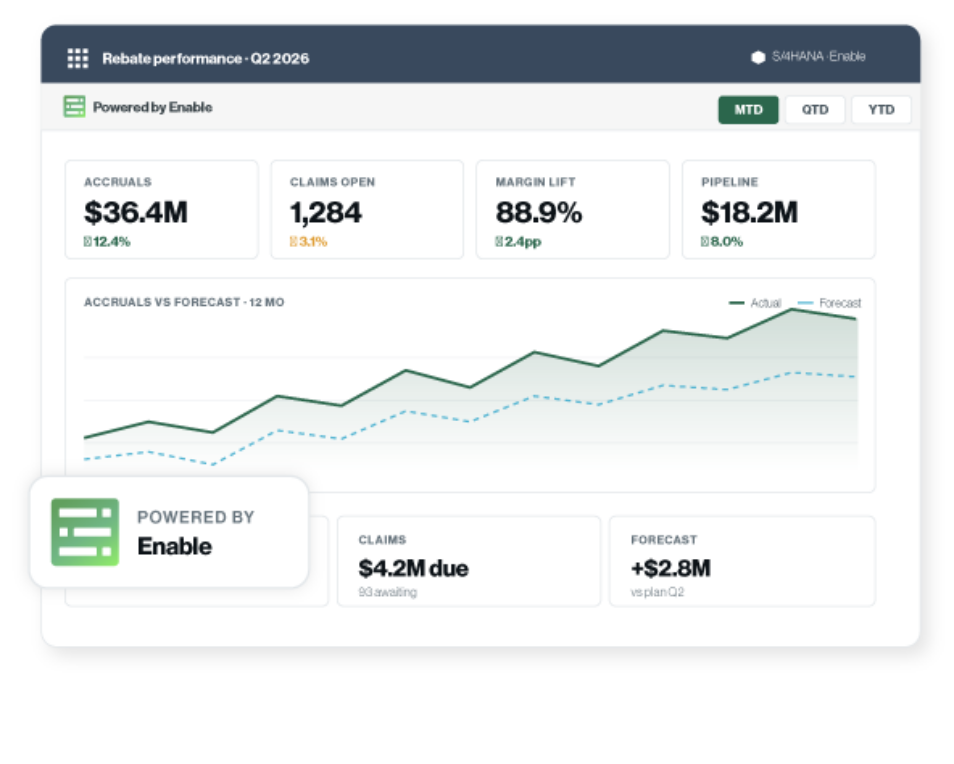
A Partnership Built for SAP Customers
Enable is the only cloud-native enterprise rebate platform built on standard SAP APIs that are fully aligned with Clean Core principles and designed to extend S/4HANA. Together with Flintfox by Enable, the world’s fastest pricing engine, we give SAP customers a complete solution for rebate and pricing management in one partnership.
Backed by the SAP Spotlight+ designation and trusted by the 40%+ of our customers who already run SAP, this is a partnership proven at scale and built to convert your SAP investment into realized margin, not just another tool in the stack.
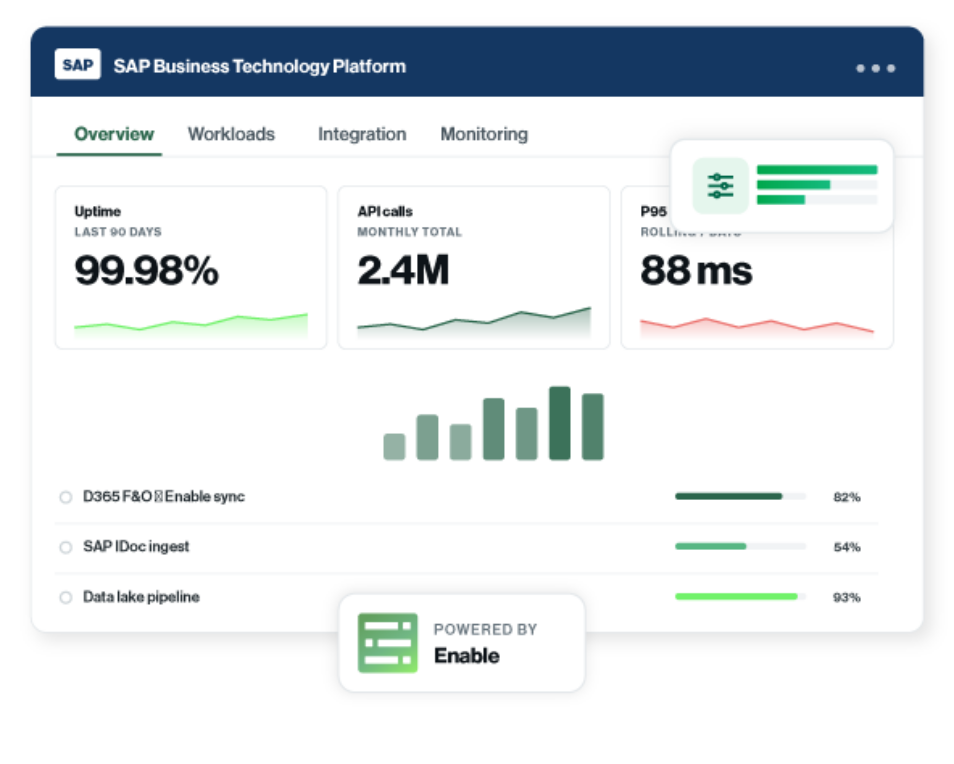
Rebate Management that Runs With SAP
Handle the full rebate lifecycle — agreement creation, accruals, claims, payments, and performance analysis — in a single collaborative platform that integrates directly with SAP S/4HANA and ECC. No more spreadsheets. No more month-end surprises. No more guessing which deals are actually working. Just clean data, confident decisions, and rebate programs that pay back.
Margin You Can See

Accurate Accruals
Automated accruals and payments that eliminate month-end surprises.

Real-Time Visibility
Real-time visibility into rebate performance across your trading network

Predictive Margin Intelligence
AI-powered forecasting to identify margin risks and growth opportunities before they hit the P&L.

One Source of Truth
Cross-functional alignment between commercial, finance, and supply chain teams.
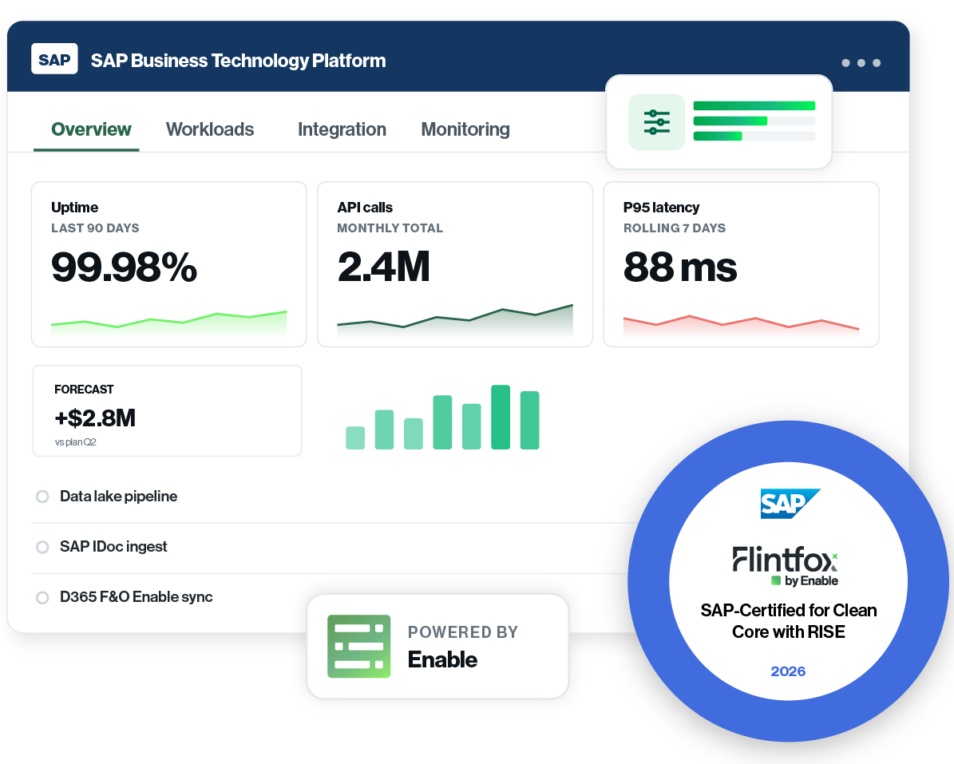
An Optimized Pricing Engine, Now Part of your SAP Stack
A pricing engine, purpose-built to work alongside SAP. Flintfox by Enable moves complex pricing logic out of your ERP and into a dedicated, high-performance engine, so your prices are calculated in real time, governed from one place, and delivered consistently to every channel.
Flintfox by Enable is SAP Clean Core certified and integrates through SAP Integration Suite using released APIs that keep pricing logic outside the ERP core. This SAP-validated approach supports smoother upgrades while delivering live pricing across SAP and connected channels.
Performance You Can Feel

Extreme Pricing Speed
Proven performance of up to 5,000 price calculations per second per processor.
True Margin Visibility
Full gross-to-net waterfall at the order line level for complete margin transparency.

Unified Price Delivery
Omnichannel pricing delivery across SAP, eCommerce, CRM, and POS.

Built for Clean Core
SAP Clean Core with ready architecture that scales without adding technical debt.
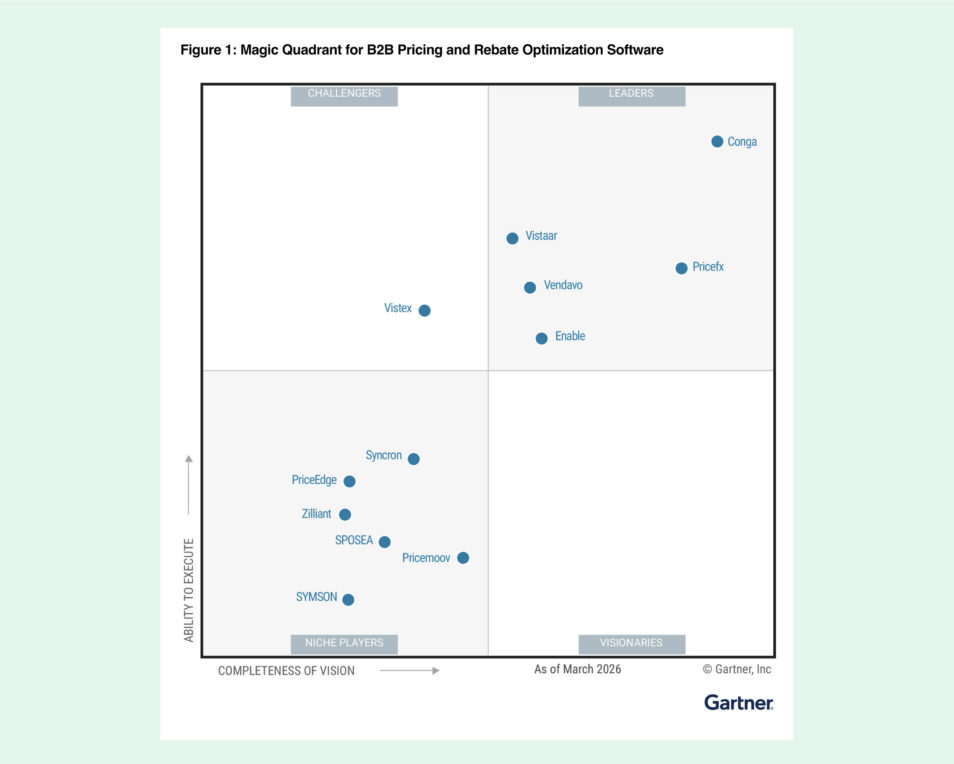
Enable Named a Leader in the Gartner® Magic Quadrant™ for B2B Pricing and Rebate Optimization
Pricing and rebates are powerful drivers of margin, but most systems weren’t built for their complexity.
Read the report to explore the landscape and evaluate solutions.
SAP FAQs
SAP rebates (also called SAP rebate management) is the functionality within SAP ERP that allows organizations to define, manage, calculate, and settle rebate agreements with customers and suppliers. In SAP ECC, this was handled through Sales Distribution (SD) rebate agreements. In SAP S/4HANA, it has been replaced by Condition Contract Management within Settlement Management. SAP rebates support both customer (sell-side) and purchasing/supplier (buy-side) rebate scenarios, enabling retroactive discounts based on sales volume, purchasing commitments, or other agreed-upon conditions.
The SAP rebate process follows these core steps: (1) Create a rebate agreement or condition contract — define terms, conditions, validity periods, and accrual rates; (2) Accrue — as invoices are posted, SAP automatically accumulates accruals against the agreement; (3) Monitor progress — track business volume against thresholds using reporting tools; (4) Partial settlement — issue interim credit memos during the program period if needed; (5) Final settlement — at period end, SAP runs the settlement program to calculate the final payout and generates a credit memo or debit memo. For S/4HANA, see SAP’s Sales Rebate Processing documentation and the Purchasing Rebate Processing guide.
SAP ECC used a legacy SD rebate process built around the VBOX index table, which became a significant performance liability at scale — the table could grow to multiple terabytes for large organizations, and any change to rebate conditions required a full index rebuild, locking rebate data across the system. SAP S/4HANA replaces this entirely with Condition Contract Management and Settlement Management, which eliminates the VBOX table, unifies customer and supplier rebates into a single framework, and improves system performance significantly. Organizations migrating from ECC to S/4HANA must close all open rebate agreements before migration — they cannot be carried forward directly.
While SAP’s native rebate tools handle foundational use cases, they have well-documented limitations for organizations with complex rebate programs. These include limited flexibility for tiered and multi-condition agreement structures, constrained reporting and analytics capabilities beyond standard settlement documents, minimal support for partner collaboration (there is no supplier-facing portal for visibility into accruals or progress), and a process that remains largely manual and ERP-dependent. For distributors managing hundreds of supplier rebate programs simultaneously, the operational overhead of native SAP rebate management is a persistent pain point — which is why many SAP customers run a dedicated rebate management platform alongside their ERP rather than relying solely on SAP’s built-in tools.
SAP supports several rebate types natively: customer (sell-side) rebates based on sales volume, purchasing (buy-side) rebates based on procurement commitments, group rebates tied to a hierarchy of customers, and material-level rebates applied at the product or product group level. In S/4HANA Settlement Management, these are all managed through condition contracts, which also support commissions, royalties, and pooled payment scenarios. See SAP’s Settlement Management overview for a full breakdown.
SAP calculates rebate accruals automatically as billing documents are posted against an active rebate agreement. The system applies the accrual rate defined in the condition contract to the qualifying business volume and posts the accrual to the relevant G/L accounts. This allows finance teams to recognize rebate liabilities in real time rather than waiting until period-end settlement. In S/4HANA, accruals are managed through the condition contract and can be monitored via SAP Fiori apps. Accurate accrual management is critical for P&L reporting — understated accruals lead to margin surprises, while overstated ones distort profitability forecasting.
Yes — and many SAP customers do. While SAP provides native rebate functionality, dedicated rebate management platforms integrate with SAP via standard APIs and ERP connectors, extending what SAP can do natively. These integrations typically pull transactional data from SAP (invoices, purchase orders, sales orders) into the rebate platform for calculation, and push settlement outputs (credit memo requests, accrual postings) back into SAP for financial processing. Enable integrates directly with SAP ECC, SAP S/4HANA, and SAP Business One, allowing organizations to manage the full complexity of their rebate programs — including partner collaboration, tiered structures, forecasting, and claims — while keeping SAP as their financial system of record.
See Enable in Action
Book a demo to see how rebate management and high-performance pricing come together to drive margin across your SAP environment.